
The Montessori Method – Learning by Doing.
An educational approach based on a model of human development.
Montessori education is an educational approach developed by Italian physician and educator Maria Montessori. Since Montessori’s first school opened to working-class children in San Lorenzo, Rome, more than 4,500 Montessori schools have opened in the USA and around 20,000 worldwide. During her career, Montessori received six nominations for the Nobel Peace Prize.
Montessori observed children and experimented with the environment, materials and lessons available to them. She valued independence, responsible freedom and respect for every aspect of a child’s natural development. Her approach encourages children to choose and act freely within a carefully prepared environment—learning by doing.
Montessori’s insight into child psychology identified “human tendencies” that drive behaviour through every stage of development. She believed education should respond to and facilitate their expression.
- Abstraction
- Activity
- Communication
- Exactness
- Exploration
- Manipulation
- Order
- Orientation
- Repetition
- Self-perfection
- Purposeful activity
We weave these important qualities into learning for our students.
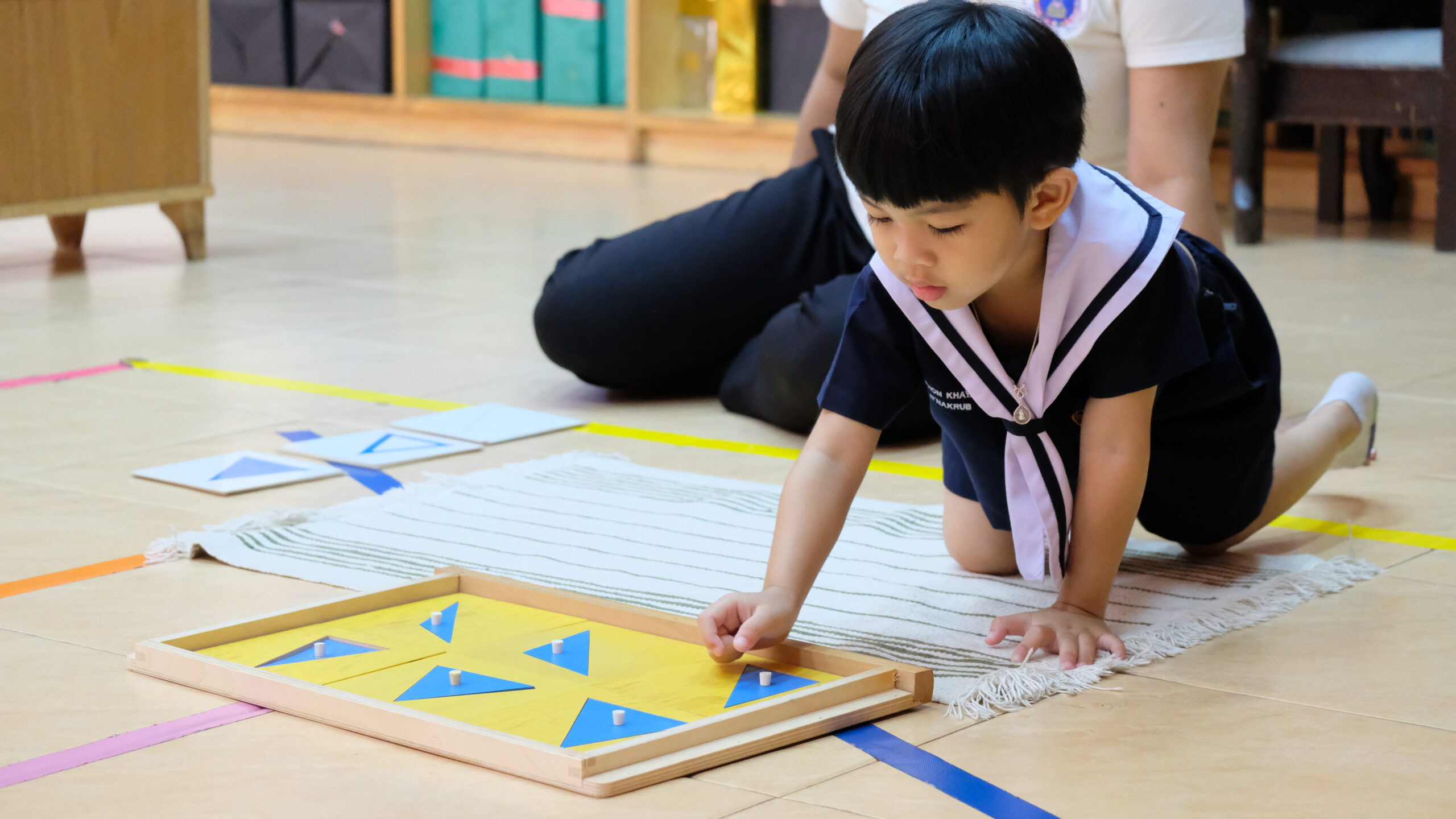
Montessori – The Learning Environment
Montessori placed importance on ease of movement and activity; beauty and harmony; cleanliness; child-sized proportions; a purposeful limitation of materials; and nature both inside and outside the classroom.
At PREP, we use the Montessori Method alongside integrated themes and subject-oriented learning. Children aged 18 months–2 years are in Nursery, while Kindergarten brings together mixed-age children aged 3–6.
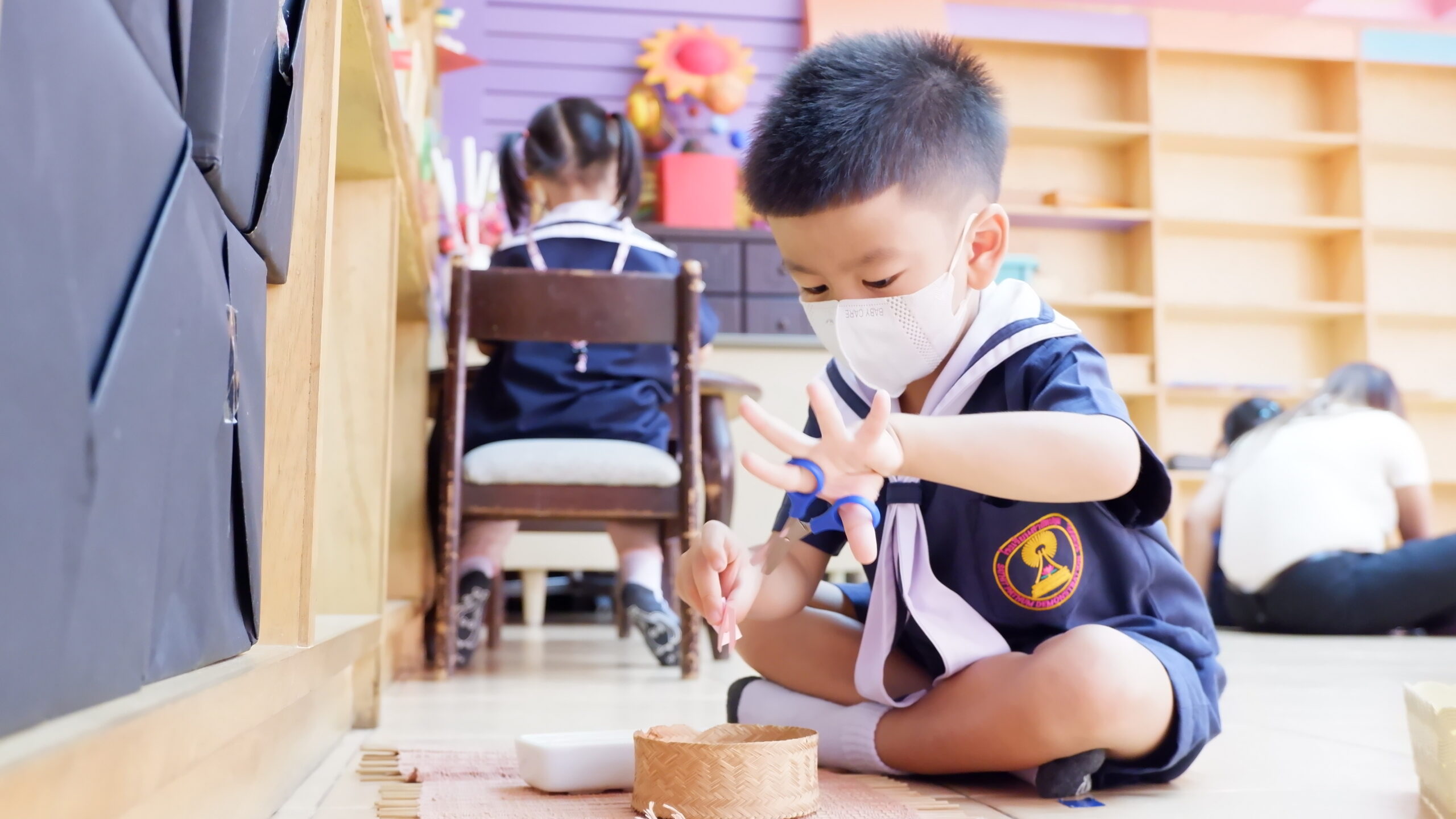
Special Periods for Young Learners
Montessori observed special periods when young children learn particular abilities with ease:
- Language—from birth to around 6 years
- Small objects—around 18 months to 3 years
- Order—around 1 to 3 years
- Sensory refinement—from birth to around 4 years
- Social behaviour—around 2½ to 4 years
The classroom makes appropriate materials and activities available while these periods are active in each child.

Montessori and Normalisation
Montessori observed a state she called “normalisation” in children aged three to six. It grows from concentration and focus on purposeful activity and supports spontaneous discipline, continuous and happy work, and social feelings of help and sympathy for others.
Montessori Classrooms
A typical Montessori classroom serves mixed-age groups with a trained teacher and assistant. Child-sized tables and chairs are combined with materials displayed on low shelves throughout the room. Teachers introduce activities, after which children may choose them with increasing independence.
Materials support practical life skills such as pouring and spooning, sensory development, mathematics, language, music and art. These experiences build concrete understanding of the fundamental concepts upon which later learning develops.
Our eclectic approach and guided reading allow students to benefit from Montessori and Multiple Intelligence theory within a warm, caring environment.
A 2006 study published in Science found that, when strictly implemented, Montessori education fosters social and academic skills equal or superior to those developed in a comparison group of schools.
A Milwaukee Public Schools study found that children who attended Montessori from ages 3–11 later outperformed high-school classmates in mathematics and science.